|
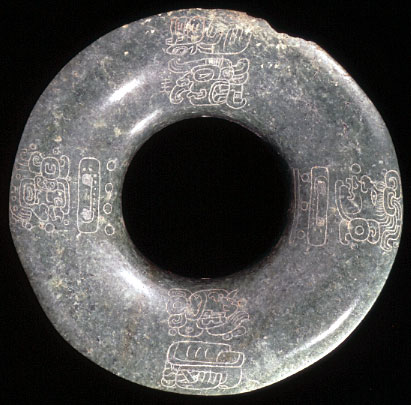
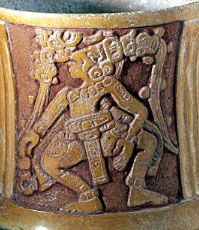
Earflare Depicting Supernatural Beings. Pomona, Belize, 50 BC-AD 50. Jadeite, 18 cm. Institute of Archaeology, Belmopan, Belize, courtesy of the Trustees of the British Museum. This earflare, found in a tomb chamber with four small jadeite figures, contains the earliest representations in hieroglyphic form of the Sun God and the Maize God. The latter deity is embodied by the dancing king on the fluted tripod vessel (below). Maya kings frequently depicted themselves in the guise of supernatural beings or wore elements of costume that illustrated a divine association. The title k'uhul ajaw (holy lord), which came into use sometime after AD 400, conveys the relationship between kings and their patron deities. Through divination rites and their patron gods, kings embodied sacred energy, ch'ulel, the life force possessed by all animate and inanimate beings in the universe, and this served as their claim to sacred status. |
Fluted Tripod Vessel. Southern Highland, Guatemala. Ceramic with red slip. 14.5 x 11.5 x 11.5 cm. Fine Arts Museums of San Francisco, Bequest of Leroy C. Cleal. |
|
Copyright 2005 Los Angeles County Museum of Art